
Hearing aid features can sound impressive on paper, but what matters is whether they help in the situations that give you trouble. A feature that is useful in a busy restaurant may matter less to someone who mainly wants easier conversations at home.
Wright Hearing Solutions will help you compare the options without turning the process into a technology lesson. The right setup depends on what you want your hearing aids to handle, not how many features are built into them.
Hearing Aid Styles
The style of a hearing aid affects how it feels in your ear, how easy it is to handle and how noticeable it is when worn. Some people prefer a device they can grip easily. Others want something that sits more discreetly.
Behind-the-ear (BTE) hearing aids sit behind your ear and connect to a piece that fits inside it. In-the-ear (ITE) models sit in the outer part of your ear and can be easier to put in and take out. In-the-canal (ITC) hearing aids fit farther inside the ear, so they tend to be less noticeable.
There is no single style that works best for everyone. We’ll compare the options based on your hearing, ear shape and how comfortable each style feels to manage day to day.
Types of Hearing Aids
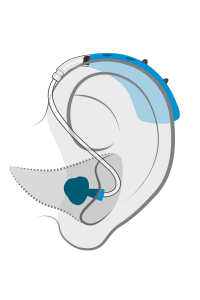
Behind the Ear (BTE)
Powerful, Adaptable Technology
BTE hearing aids are known for their power and customizability. They are an excellent option for mild-to-profound hearing loss and are the preferred option for children because of their maturing ear anatomy. The slightly larger design allows for volume and programming controls, customizable fit options and a longer battery life.
Features and Benefits
- Durable and easy to handle
- Most comprehensive range of features and sound programming options
- Larger size allows for longer battery life
- Bluetooth and wireless connectivity
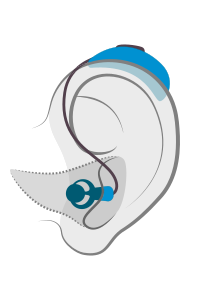
Receiver in Canal (RIC)
Comfortable, Flexible and Versatile
RIC hearing aids balance comfort and sleek design with an unparalleled sound experience. The receiver delivers sound directly into the ear canal, connecting to a small, lightweight unit that sits discreetly behind the ear. RICs are versatile devices that suit nearly all types of hearing loss, from mild to severe.
Features and Benefits
- Lightweight feel and flexible design
- More discreet than BTE models
- In-ear receiver delivers enhanced sound quality
- Bluetooth and wireless connectivity
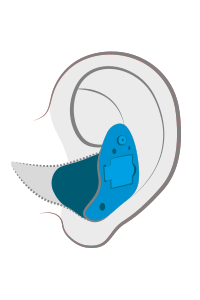
In the Ear (ITE)
Power and Comfort for All-Day Wear
ITE hearing aids use the natural acoustics of your ear to amplify sound. They are custom molded to sit comfortably within the ear bowl and their larger size makes them easy to clean and adjust. The power and design of ITEs make them ideal for those with mild-to-severe hearing loss.
Features and Benefits
- Easy to adjust and maintain
- Custom-molded for a comfortable fit
- Longer battery life for all-day use
- Bluetooth and wireless connectivity
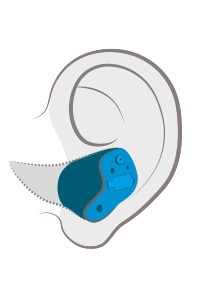
In the Canal (ITC)
Advanced Features in a Discreet Package
While slightly larger and easier to handle than smaller canal models, ITC hearing aids are still fairly discreet and can be equipped with a wide range of features. Many ITC models are available with volume control and directional microphones, which can help wearers better adapt to different sound environments.
Features and Benefits
- Custom-molded for a comfortable fit
- Less noticeable appearance
- Best suited for mild-to-moderate hearing loss
- Bluetooth and wireless connectivity
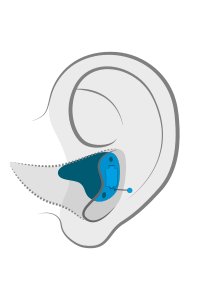
Completely in Canal (CIC)
Discreet and Direct Sound Delivery
CIC hearing aids are custom-molded to sit within the ear canal, providing a natural, nearly invisible look. They work with the ear’s shape to direct sound to the microphone and enhance sound quality. Best suited for mild-to-moderate hearing loss, CIC hearing aids are a great option for wearers that live a more active lifestyle.
Features and Benefits
- Custom-molded, secure fit
- Nearly invisible look
- Reduced wind noise, whistling and feedback
- Bluetooth and wireless connectivity
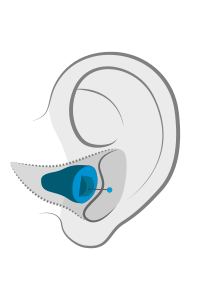
Invisible in Canal (IIC)
Out-of-Sight Sound Amplification
IIC hearing aids are the smallest and most inconspicuous style of technology available. They are custom-molded to fit deep in the ear canal and utilize the wearer’s ear anatomy to amplify sound. Best for those with mild-to-moderate hearing loss who desire an undetectable look.
Features and Benefits
- Secure fit for active lifestyles
- Virtually invisible to others
- Reduced wind noise, whistling and feedback
- Bluetooth and wireless connectivity
Cellphone Accessories for Hearing Aids
Connecting your devices to a compatible smartphone lets you hear phone calls, audiobooks and other audio through your hearing aids. Remote microphone accessories pick up one person’s voice and send it directly to your hearing aids, making conversations easier in busy places.
Some clip-on accessories also allow hands-free phone calls without holding your phone to your ear. Smartphone apps let you adjust volume, check battery levels and manage other hearing aid settings from your phone.
Hearing Aid Technology
Hearing aid technology has expanded well beyond basic amplification. Many models now include features that can be useful in a variety of listening situations, including:
- Bluetooth connectivity: Streams phone calls, television audio and music directly to your ears without external wires or bulky attachments.
- Speech enhancement: Highlights voices while dampening background noise, making busy restaurants and family gatherings much easier to manage.
- Rechargeable batteries: Replaces tiny button-cell batteries with simple overnight charging bases that deliver power all day long.
- Multisettings: Lets you switch between custom acoustic settings tailored specifically for quiet rooms, outdoor wind noise or live music.
Redux
Moisture can build up inside hearing aids from everyday wear, even if they aren’t exposed to rain or water. The Redux drying system removes that moisture using a professional drying process designed for hearing aids.
The system also measures how much moisture was removed during the appointment. We offer this service to help keep your hearing aids clean, dry and ready to wear.